Refrigeration Climate Class: What It Is and Why It Matters
Commercial refrigeration has one job above all else: to hold food, drink and ingredients safely at the correct temperature. But the environment around the cabinet can make that job much harder.
A fridge in a cool, well-ventilated prep room is not working under the same pressure as a unit positioned in a busy kitchen during a summer heatwave. Heat from cooking equipment, poor ventilation, frequent door openings and high ambient temperatures can all affect how hard the refrigeration system has to work.
That is where climate class matters.
What is refrigeration climate class?
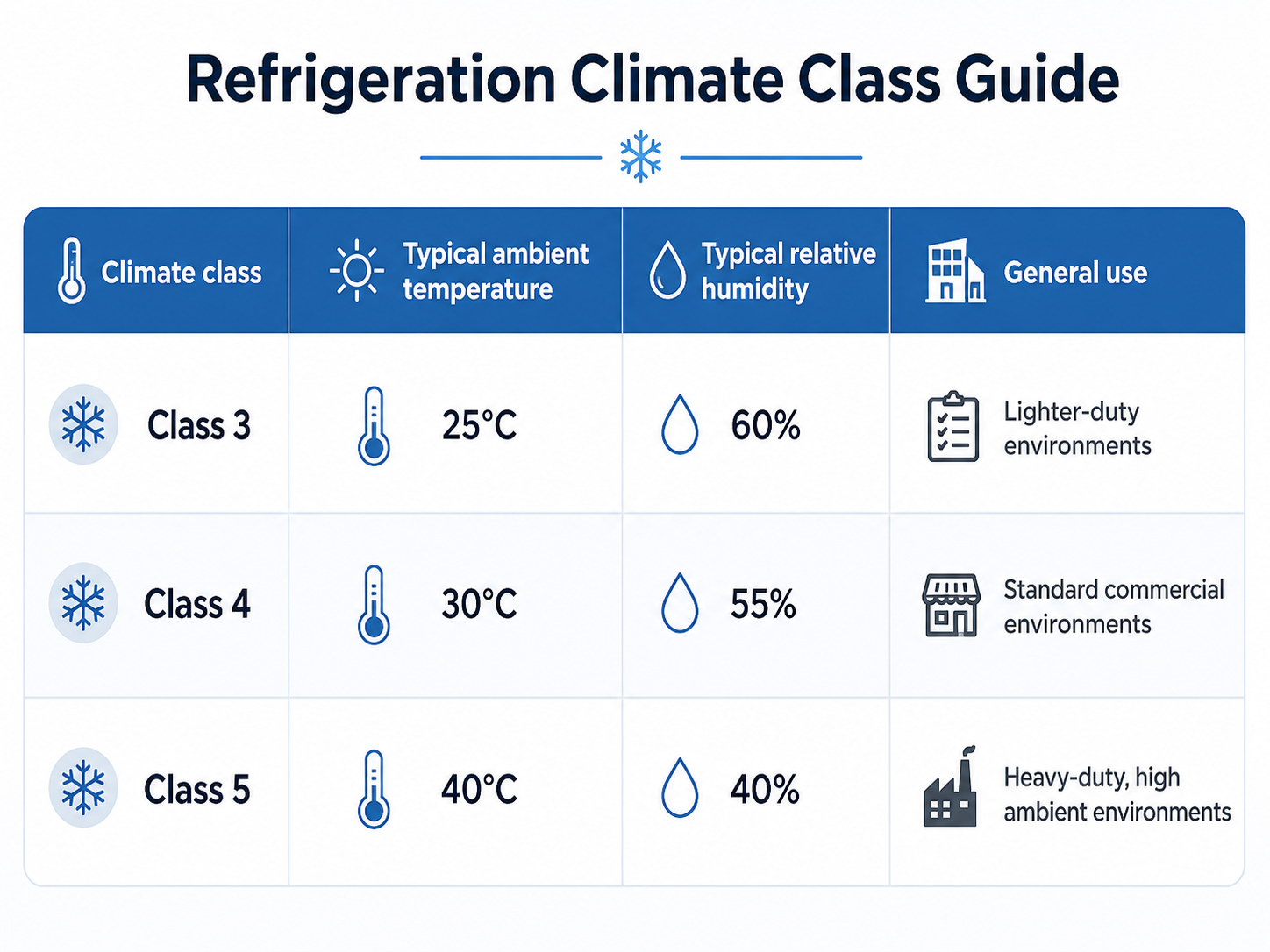
Climate class is a rating that shows the environmental conditions a refrigeration cabinet is designed to operate in.
In simple terms, it tells you the maximum ambient temperature and humidity level the unit has been tested for. This is important because a fridge does not operate in isolation. It is constantly taking heat from inside the cabinet and releasing it into the surrounding air. If that surrounding air is already hot, the system has to work harder to maintain the correct internal temperature.
A higher climate class does not simply mean a fridge is “better”. It means it has been designed and tested to perform in more demanding conditions.
Why does climate class matter?
Choosing the right climate class helps ensure the cabinet is suitable for the real environment it will be working in.
In a professional kitchen, ambient temperature can rise quickly. Ovens, grills, fryers, dishwashers and poor airflow can all increase the temperature around refrigeration equipment. During a UK summer heatwave, that pressure becomes even greater.
If a cabinet is not designed for those conditions, it may struggle to hold temperature consistently. That can lead to longer compressor run times, increased energy use, more wear on components and greater risk to stored food.
For operators, the result can be simple but serious: unreliable refrigeration when it is needed most.
Climate class and food safety
Temperature consistency is critical in foodservice. Refrigerated ingredients need to be kept within safe storage parameters, even during busy service.
A cabinet that performs well in mild conditions may not deliver the same results in a hot kitchen with doors being opened repeatedly. Climate class gives buyers a clearer indication of how the unit is expected to perform when the surrounding temperature rises.
This is especially important for kitchens, hotels, restaurants, pubs, cafés, convenience stores and multi-site operators where refrigeration failure can cause disruption, lost stock and unnecessary cost.
Climate class and energy efficiency
Energy efficiency is important, but it should never be considered in isolation.
A refrigeration cabinet may appear efficient on paper, but if it is installed in an environment beyond its intended climate class, it may need to work harder to maintain temperature. That can reduce efficiency in practice and place more strain on the system.
The best choice is not always the lowest energy figure alone. It is the product that offers the right balance of energy efficiency, cooling performance, build quality and suitability for the environment where it will actually be used.

Where to check the climate class
The climate class should be shown on the product rating label or specification sheet. Before choosing commercial refrigeration, operators should check:
- The climate class rating
- The maximum ambient temperature
- The recommended ventilation clearances
- The cabinet’s intended application
- Whether the unit is suitable for kitchen, prep, storage or display use
Installation also matters. Even a high-performance fridge needs the right airflow around it. Blocking vents, placing units too close to heat sources or ignoring clearance requirements can all affect performance.
Why this matters more in the UK than many operators realise
UK weather is becoming less predictable. Heatwaves are no longer rare exceptions, and commercial kitchens can become extremely demanding environments during hot spells.
For operators, refrigeration needs to be ready for those peaks. It is not enough for a cabinet to perform well on an average day. It needs to cope when the kitchen is busy, the doors are opening constantly and the ambient temperature is rising.
That is why climate class should be part of the buying decision, not an afterthought.
SKOPE refrigeration: built for demanding conditions
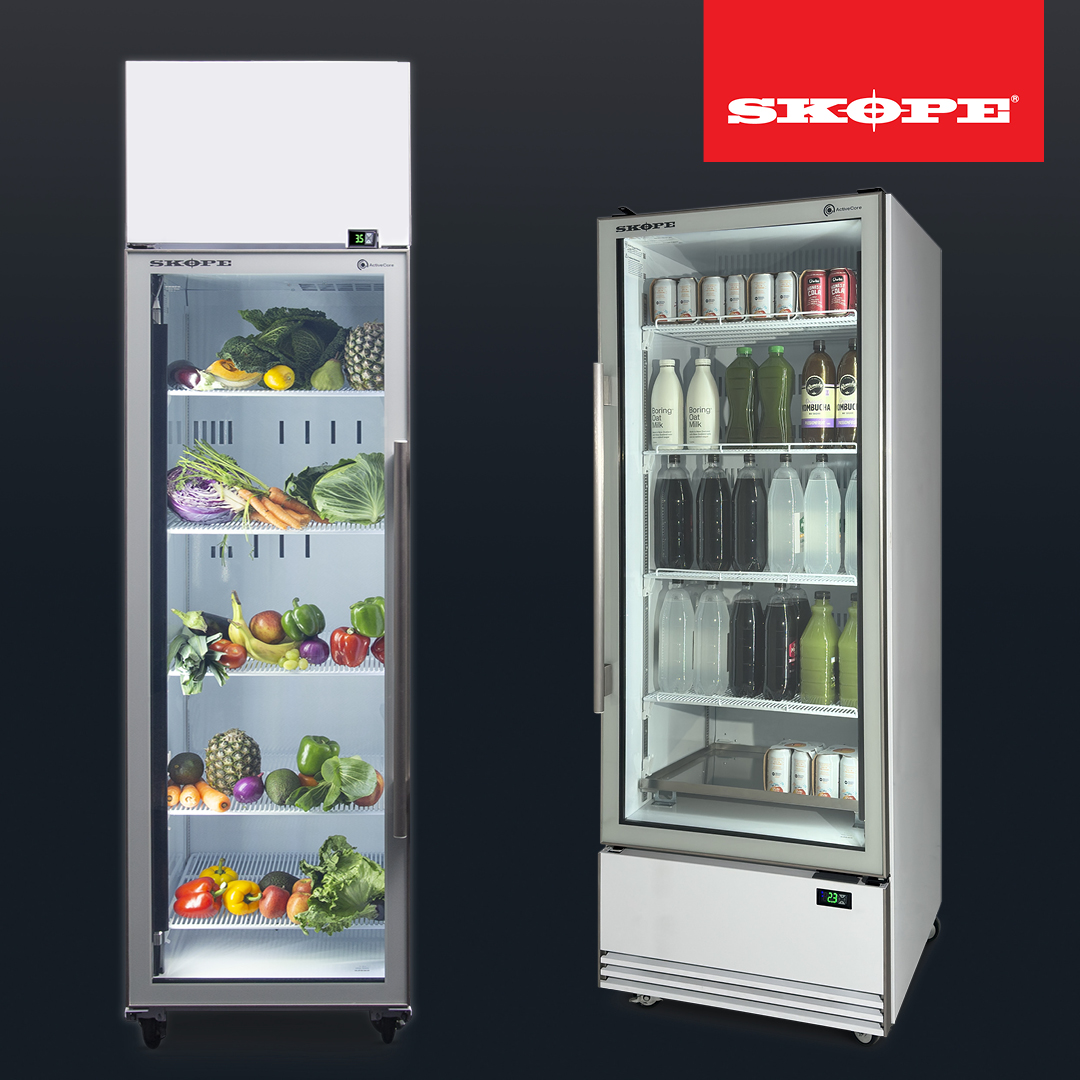
SKOPE refrigeration, available in the UK through Hubbard Systems, is designed with real foodservice environments in mind.
Across the SKOPE range, including ReFlex and ActiveCore models, high ambient performance is a key part of the product design. With most models designed to operate in temperatures up to 40°C, SKOPE refrigeration is well suited to unpredictable environments, busy commercial kitchens and the hottest UK summer days.
For operators, that means confidence. Confidence that refrigeration can keep performing during peak service. Confidence that ingredients and products are being held correctly. And confidence that the equipment has been designed for the conditions it will face in the real world.
When refrigeration really matters, climate class matters too.