Commercial Undercounter Fridges & Freezers Buying Guide
Choosing the right commercial undercounter fridge or freezer is about more than simply finding a unit that fits beneath a counter. The best choice will support your kitchen layout, protect food quality, improve day-to-day workflow and reduce unnecessary running costs.
Whether you are fitting out a café, restaurant, pub, hotel, takeaway, production kitchen or foodservice outlet, this guide explains the key areas to consider before investing in commercial undercounter refrigeration.
Why Choose an Undercounter Fridge or Freezer?
Commercial undercounter fridges and freezers are designed to provide reliable chilled or frozen storage in areas where space is limited or where ingredients need to be kept close to hand.
They are particularly useful for:
- Preparation areas
- Service counters
- Bar areas
- Small kitchens
- Satellite kitchens
- Coffee shops and cafés
- Pizza, sandwich and salad prep stations
- Back-of-house storage where upright cabinets may not be practical
Their main advantage is convenience. By positioning chilled or frozen products exactly where staff need them, operators can improve workflow, reduce unnecessary movement and make better use of available space.

1. Dimensions: Will It Actually Fit?
One of the first things to check is the physical size of the unit. It sounds obvious, but dimensions are often more complicated than simply measuring the width of the space.
You should consider:
- Overall width
- Overall depth
- Overall height
- Door or drawer clearance
- Ventilation space
- Access for cleaning and servicing
- Whether the unit needs to pass through doorways or corridors during delivery
A fridge may technically fit into a gap, but that does not always mean it is suitable for the space. For example, if the door cannot open fully, staff may struggle to load and unload product. If the unit is too deep, it may protrude beyond the counter line. If it is too tight against surrounding equipment, it may not be able to ventilate correctly.
Before purchasing, measure the installation space carefully and allow for practical working space around the unit.
2. Airflow and Ventilation: What Does the Unit Need?
Commercial refrigeration works by removing heat from inside the cabinet and releasing it outside the unit. That means airflow is essential.
If a fridge or freezer is installed in a space with poor ventilation, it may have to work harder to maintain temperature. This can lead to:
- Higher energy use
- Increased wear on components
- Reduced cooling performance
- Temperature instability
- Shorter equipment lifespan
- More frequent servicing issues
Check where the unit draws in and expels air. Some models are designed with front-breathing ventilation, which can make them more suitable for built-in or undercounter applications. Others may need additional space at the sides, rear or top.
This is especially important when installing refrigeration into a tight counter run, a hot kitchen environment, or close to cooking equipment. Always check the airflow requirements before committing to a model.
3. Construction: What Is It Made From?
The build quality of a commercial fridge or freezer has a direct impact on durability, hygiene, appearance and long-term value.
Key construction details to look at include:
Exterior Material – Stainless steel is commonly used in commercial refrigeration because it is durable, easy to clean and well suited to demanding foodservice environments. It also resists corrosion better than many painted or coated finishes, particularly in busy kitchens where equipment may be exposed to moisture, spills and frequent cleaning.
Interior Material – The interior matters just as much as the exterior. A robust, easy-clean internal liner can help maintain hygiene and withstand regular loading, unloading and cleaning. Look for smooth internal surfaces, rounded corners where available, and shelving or drawer systems that can be removed for cleaning.
Doors, Drawers and Handles – Doors and drawers are high-use components. In a busy kitchen, they may be opened hundreds of times a day. Strong hinges, solid runners, secure handles and good-quality gaskets all contribute to better performance and longer service life.
Worktop Strength – If the undercounter unit will double as a prep surface, check whether the top is suitable for that use. Some units are designed to sit beneath an existing counter, while others may be used as a working surface in their own right.

4. Fridge or Freezer?
Before choosing a model, be clear about what you need the unit to store.
A commercial undercounter fridge is suitable for chilled ingredients, dairy products, drinks, sauces, prepared foods and other refrigerated items.
A commercial undercounter freezer is suitable for frozen ingredients, desserts, bakery items, ice cream products, frozen meals and other frozen goods.
Think about your menu, stock rotation, delivery frequency and daily usage patterns. Buying too small can create operational pressure, while buying too large may waste space and energy.
5. Doors or Drawers?
Undercounter refrigeration is often available with either doors, drawers, or a combination of both.
Door Cabinets – Door cabinets are flexible and usually offer more open internal storage. They are useful for larger containers, mixed stock and general-purpose storage.
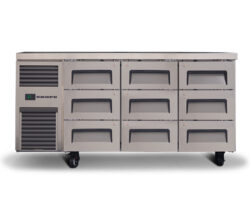
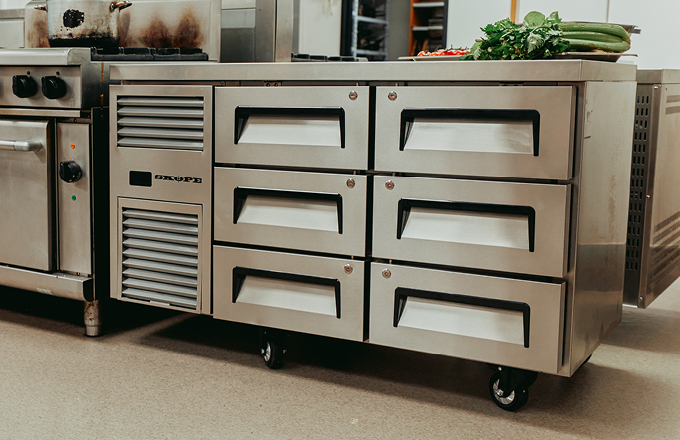
Drawer Cabinets – Drawers can be extremely practical in prep areas because they allow staff to access ingredients quickly without reaching deep into the cabinet. They can also help organise stock more clearly.
The best option depends on how the unit will be used. For general storage, doors may be more flexible. For high-speed preparation, drawers may improve workflow.
6. Capacity and Storage Layout
Do not rely on external dimensions alone. Two units with similar footprints can offer different internal capacities depending on insulation thickness, layout, shelf design and refrigeration system placement.
Consider:
- Internal usable volume
- Shelf positions
- GN pan compatibility
- Drawer depth
- Whether containers fit comfortably
- Ease of loading and stock rotation
- How quickly staff can access commonly used items
A good undercounter fridge or freezer should not only hold enough stock; it should also make that stock easy to organise and retrieve.

7. Energy Efficiency and Running Costs
The purchase price is only one part of the total cost of ownership. Commercial refrigeration runs continuously, so energy efficiency can have a significant impact over the life of the equipment.
When comparing models, consider:
- Energy rating
- Daily energy consumption
- Insulation quality
- Door or drawer gasket quality
- Refrigeration system efficiency
- How well the unit maintains temperature in real-world use
- Whether the unit is suited to the environment it will operate in
A lower-cost unit that uses more energy or struggles in a warm kitchen may cost more over time than a better-built, more efficient alternative.
8. Temperature Performance and Food Safety
Reliable temperature control is essential in any foodservice environment. An undercounter fridge or freezer should be able to maintain the required temperature even during busy service periods.
Look for features that support consistent performance, such as:
- Clear temperature display
- Accurate controls
- Affective insulation
- Reliable airflow inside the cabinet
- Strong door seals
- Alarms or alerts where available
- Easy access for cleaning filters and condensers
Poor temperature performance can affect food quality, increase waste and create avoidable food safety risks.
9. Cleaning and Maintenance
Commercial refrigeration should be easy to clean and maintain. In a busy operation, complicated cleaning routines are often skipped or delayed, which can affect hygiene and performance.
Look for:
- Removable shelves or drawers
- Smooth internal surfaces
- Easy-clean door gaskets
- Accessible condenser filters
- Clear drainage points where applicable
- Strong materials that tolerate regular cleaning
Regular maintenance also matters. Make sure the unit can be accessed for servicing once installed. A fridge that fits perfectly into a space but cannot be serviced easily may create problems later.
10. Noise and Location
Noise may not be the first consideration in a busy kitchen, but it can matter in front-of-house areas, bars, cafés or open-plan foodservice spaces.
If the unit will be installed near customers or staff working for long periods, check whether noise levels are suitable for that environment. A quieter unit may be more appropriate for customer-facing locations, while performance and capacity may be the priority in back-of-house kitchens.
11. The Operating Environment
Not every refrigeration unit is suitable for every location. The performance of a commercial fridge or freezer can be affected by the surrounding environment.
Consider whether the unit will be installed:
- In a hot kitchen
- Next to ovens, grills or fryers
- Under a counter with limited airflow
- In a bar area
- In a customer-facing space
- In a high-traffic prep station
- In an area with frequent door openings
A fridge used in a warm, high-pressure kitchen environment needs to be built for that level of demand. Always choose refrigeration that is suitable for the conditions it will face every day.
12. Delivery, Installation and Access
Before ordering, think about how the unit will physically get into position.
Check:
- Doorway widths
- Corridors
- Steps
- Lifts
- Tight turns
- Floor surfaces
- Final positioning
- Electrical supply
- Whether castors or legs are required
It is also worth confirming whether the unit needs time to settle before being switched on after delivery, and whether installation must be carried out by a qualified engineer.
13. Price Versus Long-Term Value
It can be tempting to choose the cheapest option, especially when budgets are tight. However, commercial refrigeration is a working asset that needs to perform every day.
A good buying decision should balance:
- Purchase price
- Energy consumption
- Durability
- Warranty
- Service support
- Ease of maintenance
- Suitability for the application
- Expected lifespan
The right unit should not only fit the budget; it should fit the operation.
Questions to Ask Before You Buy
Before choosing a commercial undercounter fridge or freezer, ask:
- What products will I store in it?
- How much capacity do I realistically need?
- Will it fit the available space, including door or drawer clearance?
- What ventilation does it require?
- Is it suitable for the room temperature and working environment?
- Is it built from durable, hygienic materials?
- Is it easy to clean and maintain?
- How efficient is it to run?
- Can it be serviced easily once installed?
- Does it support the way my team actually works?
These questions will help narrow the choice and reduce the risk of buying equipment that looks right on paper but does not perform well in practice.
Where SKOPE Fits In
Once the key buying considerations are clear, it becomes easier to identify products that are genuinely suitable for commercial use.
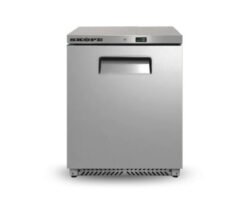
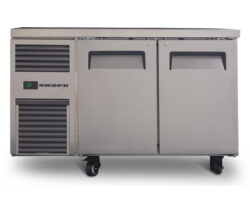
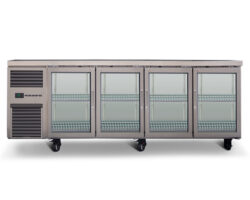
SKOPE undercounter refrigeration has been developed for demanding foodservice environments where reliability, build quality and practical design are essential. Across the range, the emphasis is on durable construction, efficient performance and layouts designed to support busy kitchens, prep areas and hospitality operations.
For operators reviewing their refrigeration options, SKOPE products are a serious option where there is a need for robust undercounter storage, practical configurations and equipment designed with long-term commercial use in mind.
The most important step is to choose refrigeration that fits the space, suits the application and supports the way your business works day after day. A well-selected undercounter fridge or freezer should make life easier for staff, protect product quality and deliver dependable performance over the long term.

SKOPE Undercounter Refrigeration